


- 商品介绍
- 规格参数
- 包装参数
General description
Ubiquitin (Ub) is initially produced as a 229 amino acids Polyubiquitin-B (UniProt: P0CG47) precursor protein encoded by the UBB gene (Gene ID: 7314) or a 685 amino acids Polyubiquitin-C precursor protein (UniProt: P0CG48) encoded by the UBC gene (Gene ID: 7316) in human. Ub exists either covalently attached to another protein, or free (unanchored). When covalently bound, it is conjugated to target proteins via an isopeptide bond either as a monomer (monoubiquitin), a polymer linked via different lysine residues of the ubiquitin (polyubiquitin chains) or a linear polymer linked via the initiator methionine (Met) of the ubiquitin (linear polyubiquitin chains). Ub is linked covalently via its carboxyl terminus (Gly76) to lysine residues in target proteins. In a given target lysine residue can be linked to one single Ub molecule (monoubiquitylated) or to a chain of Ub molecules (polyubiquitylated). In a polyUb chain, Ub molecules can be linked through one of the seven lysine residues (K6, K11, K27, K29, K33, K48, and K63). Polyubiquitin chains, when attached to a target protein, have different functions depending on the lysine residue of the ubiquitin that is linked. For example, lysine 6-linked may be involved in DNA repair; lysine 11-linked is involved in endoplasmic reticulum-associated degradation (ERAD) and in cell-cycle regulation, and lysine 29-linked is involved in lysosomal degradation. Lysine 48-linked chains mark proteins for proteasomal degradation, while lysine 63-linked chains are involved in endocytosis, DNA-damage responses, and in signaling leading to activation of the transcription factor NF-kB. Ubiquitin undergoes phosphorylation at the serine 57 by a ubiquitin kinase and this phosphorylation is an important modifier of ubiquitin function, particularly in response to proteotoxic stress. This phosphorylation may also be a deciding factor whether ubiquitin is recycled or degraded during multi-vesicular body sorting on endosomes. (Ref.: Hepowit, NL., et al (2020). eLife 9; e58155; Lee, S., et al. (2017) eLife. 6; e29176).
We are committed to bringing you greener alternative products, which adhere to one or more of The 12 Principles of Green Chemistry.This antibody is Preservative-free, produced without the harm or sacrifice of animals and exceptionally stable to allow for ambient shipping and storage if needed and thus aligns with "Waste Prevention", "Designing Safer Chemicals" and "Design for Energy Efficiency". Click here for more information.
ZooMAb® antibodies represent an entirely new generation of recombinant monoclonal antibodies.Each ZooMAb® antibody is manufactured using our proprietary recombinant expression system, purified to homogeneity, and precisely dispensed to produce robust and highly reproducible lot-to-lot consistency. Only top-performing clones are released for use by researchers. Each antibody is validated for high specificity and affinity across multiple applications, including its most commonly used application. ZooMAb® antibodies are reliably available and ready to ship when you need them.
Immunogen
A branched peptide corresponding to the Lys63 ubiquitination site. The C-terminus of Ubiquitin 71-76 peptide (RLRGG) was attached to the K63 in the Ubiquitin 58-63 peptide (CDYNIQKEST).
Application
Quality Control Testing
Evaluated by Western Blotting in lysate from HeLa cells treated with MG132.
Western Blotting Analysis (WB): A 1:1,000 dilution of this antibody detected Ubiquitin Lys63 in lysate from HeLa cells treated with MG132 (25 nM; 4 h), but not in untreated cells.
Tested applications
Western Blotting Analysis: A 1:1,000 dilution from a representative lot detected Ubiquitin Lys63 in Ubiquitin K63, Ubiquitin K11, and Ubiquitin K48.
Affinity Binding Assay: A representative lot of this antibody bound recombinant Ubiquitin-Lys63 with a KD of 5.2 x 10⁻⁶ in an affinity binding assay.
Enzyme Immunoassay Analysis (ELISA): A serial of dilutions from a representative lot detected recombinant Ubiquitin Lys63, but not Ubiquitin K11 or GST protein.
Note: Actual optimal working dilutions must be determined by end user as specimens, and experimental conditions may vary with the end user
Evaluated by Western Blotting in lysate from HeLa cells treated with MG132.
Western Blotting Analysis (WB): A 1:1,000 dilution of this antibody detected Ubiquitin Lys63 in lysate from HeLa cells treated with MG132 (25 nM; 4 h), but not in untreated cells.
Biochem/physiol Actions
Clone HWA4C4 is a ZooMAb® Mouse recombinant monoclonal antibody that specifically detects Ubiquitin Lys 63 tagged proteins.
Physical form
Purified recombinant mouse monoclonal antibody IgG, lyophilized in PBS, 5% Trehalose, normal appearance a coarse or translucent resin. The PBS/trehalose components in the ZooMAb formulation can have the appearance of a semi-solid (bead like gel) after lyophilization. This is a normal phenomenon. Please follow the recommended reconstitution procedure in the data sheet to dissolve the semi-solid, bead-like, gel-appearing material. The resulting antibody solution is completely stable and functional as proven by full functional testing. Contains no biocide or preservatives, such as azide, or any animal by-products. Larger pack sizes provided as multiples of 25 μL.
Preparation Note
Recommend storage of lyophilized product at 2-8°C; Before reconstitution, micro-centrifuge vials briefly to spin down material to bottom of the vial; Reconstitute each vial by adding 25 μL of filtered lab grade water or PBS; Reconstituted antibodies can be stored at 2-8°C, or -20°C for long term storage. Avoid repeated freeze-thaws.
Reconstitute lyophilized antibody pellet with 25μL of ultrapure water or Phosphate Buffered Saline (PBS). Please refer to our reconstitution protocol and the specific application guidance on the suggested starting dilutions and sample type.
Legal Information
ZooMAb is a registered trademark of Merck KGaA, Darmstadt, Germany
Disclaimer
Unless otherwise stated in our catalog or other company documentation accompanying the product(s), our products are intended for research use only and are not to be used for any other purpose, which includes but is not limited to, unauthorized commercial uses, in vitro diagnostic uses, ex vivo or in vivo therapeutic uses or any type of consumption or application to humans or animals.
| biological source | mouse |
| Quality Level | 200 |
| recombinant | expressed in HEK 293 cells |
| conjugate | unconjugated |
| antibody form | purified antibody |
| antibody product type | primary antibodies |
| clone | HWA4C4, recombinant monoclonal |
| product line | ZooMAb® learn more |
| form | lyophilized |
| purified by | using protein G |
| species reactivity | human |
| packaging | antibody small pack of 25 μL |
| greener alternative product characteristics | Waste Prevention Designing Safer Chemicals Design for Energy Efficiency Learn more about the Principles of Green Chemistry. |
| enhanced validation | recombinant expression Learn more about Antibody Enhanced Validation |
| sustainability | Greener Alternative Product |
| technique(s) | ELISA: suitable,affinity binding assay: suitable,western blot: suitable |
| isotype | IgG2aλ |
| epitope sequence | N-terminal half |
| Protein ID accession no. | NM_018955.2 |
| UniProt accession no. | P0CG47 |
| greener alternative category | Aligned, |
| shipped in | ambient |
| storage temp. | 2-8°C |
| target post-translational modification | unmodified |
| Gene Information | human ... UBB(7314) |
| 长度(mm) | |
| 宽度(mm) | |
| 高度(mm) | |
| 重量(kg) |
-
¥ 2707.32
-
询价
-
询价
-
询价
-
¥ 1724.25
-
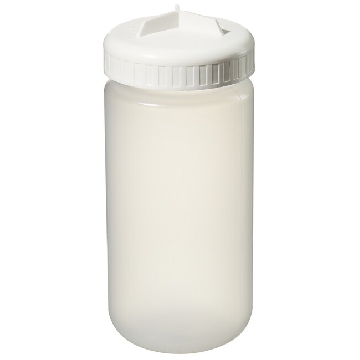
¥ 9737.84
-
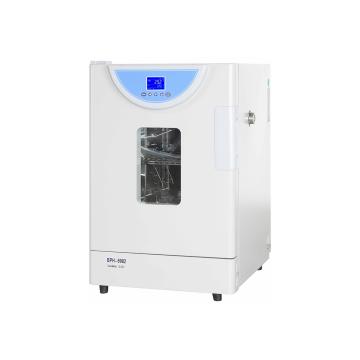
询价
-
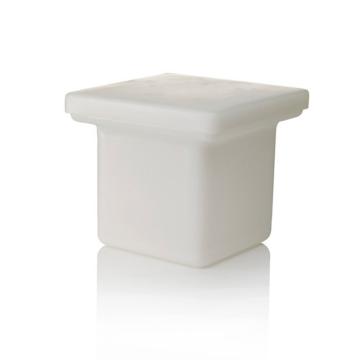
询价
-
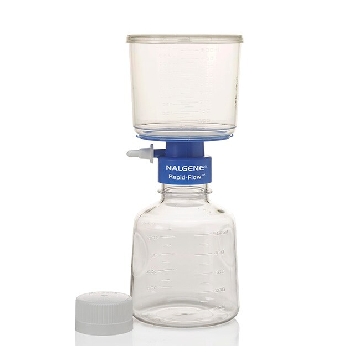
¥ 3372.68
-
¥ 5167.58
-
询价
-
询价
-
¥ 4404.38
-
¥ 20380.83
-
¥ 2099.27
-
¥ 5804.96
-
¥ 3662.39
-
¥ 56581.65
-
¥ 15537.49
-
¥ 17652.29









 微信小程序
7X24小时在线咨询
微信小程序
7X24小时在线咨询