




- 商品介绍
- 规格参数
- 包装参数
Biochem/physiol Actions
The CTD works as a binding scaffold for nuclear factors through its phosphorylation. It is suggested to be also involved in chromatin structure modification, DNA damage/repair, protein degradation and synthesis, RNA degradation, snRNA (small nuclear RNA) modification, and snoRNP (small nucleolar ribonucleoprotein) biogenesis.
The carboxy-terminal repeat domain (CTD) of the largest subunit of RNA pol II contains tandem repeats of a heptapeptide sequence Tyr-Ser-Pro-Thr-Ser-Pro-Ser which is highly conserved among eukaryotic organisms. There are two forms of RNA pol II in vivo: IIO, which is extensively phosphorylated at the CTD, and IIA, which is not phosphorylated. The IIA form preferentially enters the pre-initiation complex (PIC), whereas IIO is found in the elongation complex. The kinase activity of TFIIH can mediate CTD phosphorylation, although other kinases, including Cdc2, Ctk1, the Srb10-Srb11 kinase-cyclin pair, and P-TEFb, have also been implicated in CTD phosphorylation. A phosphatase responsible for the dephosphorylation of the CTD has also been identified. CTD phosphatase activity is regulated by TFIIB and TFIIF. The CTD has also been implicated in pre-mRNA processing, most likely functioning as a platform for the recruitment and assembly of factors involved in pre-mRNA processing.
Physical form
Clear and colorless frozen liquid solution
Preparation Note
Use a manual defrost freezer and avoid repeated freeze-thaw cycles. While working, please keep sample on ice.
| biological source | human |
| recombinant | expressed in E. coli |
| assay | ≥70% (SDS-PAGE) |
| form | frozen liquid |
| mol wt | ~68.1 kDa |
| packaging | pkg of 10 μg |
| storage condition | avoid repeated freeze/thaw cycles |
| color | clear colorless |
| NCBI accession no. | NM_000937 |
| UniProt accession no. | P24928 |
| shipped in | dry ice |
| storage temp. | −70°C |
| Gene Information | human ... POLR2A(5430) |
| 长度(mm) | |
| 宽度(mm) | |
| 高度(mm) | |
| 重量(kg) |
-
询价
-
¥ 2290.21
-
询价
-
询价
-
询价
-
询价
-
询价
-
询价
-
询价
-
询价
-
询价
-
询价
-
询价
-
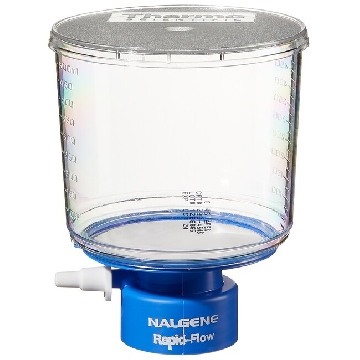 瓶顶过滤器-500ml容量,MF75TM系列,聚苯乙烯外壳,75mmPES滤膜,孔径0.45um,适合瓶颈尺寸33mm,12/箱,295-3345,Nalgene,Thermofisher,赛默飞世尔
¥ 1938.54
-
¥ 4897.21
-
¥ 2268.97
-
¥ 3319.60
-
¥ 1196.00
-
¥ 2869.87
-
¥ 1351.48









 微信小程序
7X24小时在线咨询
微信小程序
7X24小时在线咨询