



- 商品介绍
- 规格参数
- 包装参数
General description
All ChIPAb+ antibodies are individually validated for chromatin precipitation, every lot, every time. Each ChIPAb+ antibody set includes control primers (tested every lot by qPCR) to biologically validate your IP results in a locus-specific context. The qPCR protocol and primer sequences are provided, allowing researchers to validate ChIP protocols when using our antibody in their chromatin context. Each set also includes a negative control antibody to ensure specificity of the ChIP reaction.
The ChIPAb+ Trimethyl-Histone H3 (Lys36) set includes the Trimethyl-Histone H3 (Lys36) antibody, a negative control antibody (normal rabbit IgG), and qPCR primers which amplify a 147 bp region of human BDNF intron. The Trimethyl-Histone H3 (Lys36) and negative control antibodies are supplied in a scalable "per ChIP" reaction size and can be used to functionally validate the precipitation of Trimethyl-Histone H3 (Lys36)-associated chromatin.
Histones are highly conserved proteins that serve as the structural scaffold for the organization of nuclear DNA into chromatin. The four core histones, H2A, H2B, H3, and H4, assemble into an octamer (2 molecules of each). Subsequently, 146 base pairs of DNA are wrapped around the octamer, forming a nucleosome, the basic subunit of chromatin. Histones are modified post-translationally by the actions of enzymes in both the nucleus and cytoplasm. These modifications regulate DNA transcription, repair, recombination, and replication. The most commonly studied modifications are acetylation, phosphorylation, methylation, and ubiquitination. These modifications can alter local chromatin architecture, or recruit trans-acting factors that recognize specific histone modifications (the "histone code" hypothesis). The modifications occur predominantly on the N-terminal and C-terminal tails that extend beyond the nucleosome core particle. Methylation of histone H3 on Lys36 (H3K36me2/3) is tightly associated with actively transcribed genes, and this modification is found primarily within the coding region, suggesting H3K36 methylation is necessary for efficient RNA polymerase II elongation and processivity.
~17 kDa
Immunogen
Epitope: Trimethylated Lys36
Linear peptide corresponding to human
Histone H3 trimethylated at Lys36 with peptide sequence APATGGV(K)KPHRYRPGC
Application
Chromatin Immunoprecipitation:
Sonicated chromatin prepared from HeLa cells (1 X 10⁶ cell equivalents per IP) were subjected to chromatin immunoprecipitation using 2 µg of either Normal rabbit IgG or 2 µL Anti-trimethyl-Histone H3 (Lys36) and the Magna ChIP
Western Blot Analysis and Peptide Inhibition:
Representative lot data.
Recombinant Histone H3 (Catalog # 14-411, lane 1) and chicken Core Histones (Catalog # 13-107, lane 2) were resolved by electrophoresis, transferred to nitrocellulose and probed with antitrimethyl-Histone H3 (Lys36) (1:1000 dilution) or anti-trimethyl-Histone H3 (Lys36) pre-adsorbed with 1mM histone H3 peptides containing the following modifications:
Lane 3: monomethyl-lysine 36
Lane 4: dimethyl-lysine 36
Lane 5: trimethyl-lysine 36
Lane 6: unmodified
Proteins were visualized using a goat anti-rabbit secondary antibody conjugated to HRP and a chemiluminescence detection system. (Please see figures).
Dot Blot Specificity Analysis:
Representative lot data.
Histone peptides with various modifications (see table) were transferred to PVDF membrane and probed with Anti-trimethyl Histone H3 (Lys36) (1:500 dilution). Proteins were visualized using a Donkey Anti-Rabbit IgG secondary antibody conjugated to HRP and a chemiluminescence detection system. (Please see figures).
Research Category
Epigenetics & Nuclear Function
Research Sub Category
Histones
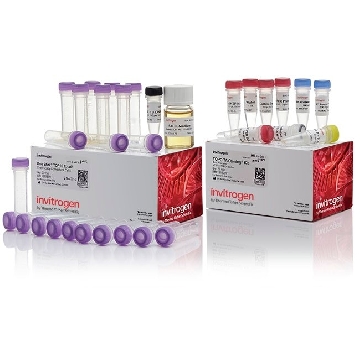
This ChIPAb+ Trimethyl-Histone H3 (Lys36) -ChIP Validated Antibody & Primer Set conveniently includes the antibody & the specific control PCR primers.
Biochem/physiol Actions
Recognizes Trimethyl-Histone H3 (Lys36), Mr ~17 kDa.
Wide reactivity with other species is expected.
Packaging
25 assays per set. Recommended use: 0.1 μg of antibody per chromatin immunoprecipitation (dependent upon biological context).
Physical form
Anti-Trimethyl Histone H3 (Lys36) (Rabbit Polyclonal), Part No. CS207341. One vial containing 50 µL (0.05 mg/mL) purified rabbit polyclonal in buffer containing 0.1 M Tris-Glycine (pH7.4),150mM NaCl, and 0.05% sodium azide, before the addition of 30% glycerol. Store at -20°C.
Normal Rabbit IgG, Part No. CS200581. One vial containing 7.5 µg Rabbit IgG in 75 µL storage buffer containing 0.05% sodium azide. Store at -20°C.
ChIP Primers, GAPDH coding D2. Part No. CS207323. One vial containing 75 μL of 5 μM of each primer specific for human GAPDH coding region (chr12:6647453+6647539 hg19 build) . Store at -20°C.
FOR: 5’ GCC ATG TAG ACC CCT TGA AGA G 3’
REV: 5’ ACT GGT TGA GCA CAG GGT ACT TTA T 3’
Format: Purified
Preparation Note
Stable for 1 year at -20°C from date of receipt. Handling Recommendations: Upon first thaw, and prior to removing the cap, centrifuge the vial and gently mix the solution. Aliquot into microcentrifuge tubes and store at -20°C. Avoid repeated freeze/thaw cycles, which may damage IgG and affect product performance.
Analysis Note
Chromatin Immunoprecipitation:
Sonicated chromatin prepared from HeLa cells (1e5 cell equivalents per IP) were subjected to chromatin immunoprecipitation using 0.1 µg of either Normal Rabbit IgG (Part No. CS200581), or 0.1 µg Anti-Trimethyl-Histone H3 (Lys36) (Part No.CS207341) and the Magna ChIP® HiSens Kit (Cat. # 17-10460). Successful immunoprecipitation of trimethyl-Histone H3 (Lys36) associated DNA fragments was verified by qPCR using ChIP Primers, GAPDH coding D2 (Part No. CS207323).
Please refer to the Magna ChIP
Control
Includes negative control rabbit IgG antibody and primers specific for human BDNF Intron.
Legal Information
MAGNA CHIP is a registered trademark of Merck KGaA, Darmstadt, Germany
UPSTATE is a registered trademark of Merck KGaA, Darmstadt, Germany
Disclaimer
Unless otherwise stated in our catalog or other company documentation accompanying the product(s), our products are intended for research use only and are not to be used for any other purpose, which includes but is not limited to, unauthorized commercial uses, in vitro diagnostic uses, ex vivo or in vivo therapeutic uses or any type of consumption or application to humans or animals.
| biological source | rabbit |
| Quality Segment | 100 |
| clone | polyclonal |
| species reactivity | human, mouse |
| manufacturer/tradename | ChIPAb+,Upstate® |
| technique(s) | ChIP: suitable (ChIP-seq),dot blot: suitable,immunoprecipitation (IP): suitable,western blot: suitable |
| NCBI accession no. | NP_003484 |
| UniProt accession no. | Q16695 |
| shipped in | dry ice |
| 长度(mm) | |
| 宽度(mm) | |
| 高度(mm) | |
| 重量(kg) |
-
询价
-
¥ 1683.78
-
¥ 1302.89
-
¥ 4039.86
-
询价
-
询价
-
询价
-
询价
-
询价
-
询价
-
询价
-
¥ 3442.25
-
¥ 8135.09
-
¥ 3275.78
-
询价
-

询价
-
询价
-
¥ 10277.12
-
¥ 2882.02
-
¥ 1476.00









 微信小程序
7X24小时在线咨询
微信小程序
7X24小时在线咨询